
The Supreme Court on Friday directed a Sambhal trial court to temporarily halt proceedings in the case over the Mughal-era Shahi Jama Masjid and its survey at Chandausi while directing the UP government to maintain peace and harmony in the violence-hit town.

Implementation of sports bill in 6 months, regulation of participation standard safeguard: Mandaviya

The Supreme Court of India granted custody of a man suffering from cerebral palsy to his mother, a US national, after determining it was in his best interest due to his inability to make independent decisions. The court overruled a Madras High Court decision, finding the lower court's interaction with the son insufficient to assess his needs. The Supreme Court emphasized the son's limited cognitive capacity and the availability of specialized support in the US, where he had completed most of his schooling.
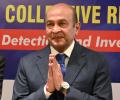
The Supreme Court collegium has confirmed the transfer of Delhi High Court Justice Yashwant Varma to his parent Allahabad High Court. This decision comes after an inquiry was initiated against Justice Varma regarding the alleged discovery of a large amount of cash at his official residence. The transfer recommendation was made public in a resolution uploaded on the Supreme Court's website. The alleged cash discovery occurred following a fire at Varma's residence in Delhi on March 14, 2025. The apex court collegium, headed by Chief Justice Sanjiv Khanna, has also constituted a three-member inquiry committee to further investigate the matter.
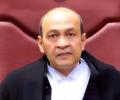
A video and inquiry report have raised questions about the Delhi Fire Services' claim that no cash was found at the official residence of Delhi High Court judge Justice Yashwant Varma during a fire incident on March 14. The video, which has gone viral on social media, shows fire fighters dousing flames on articles that appear to include half-burnt Indian currency notes. The Delhi High Court Chief Justice has initiated an in-house inquiry against Justice Varma and the Supreme Court has proposed his transfer to the Allahabad High Court.

The Supreme Court of India will hear a batch of pleas seeking a probe into the alleged unauthorised use of Pegasus spyware for the surveillance of journalists and others next week. The court had previously ordered a technical panel to investigate the matter but received no reports. Senior advocate Shyam Divan, appearing for some petitioners, urged the court to pass directions as the reports were not shared. The court has now listed the matter for hearing on April 29.

Rijiju also hit out at Congress leader Rahul Gandhi, saying that his own party MPs "get uncomfortable" when he speaks in Parliament and are apprehensive that he will do "anap-shanap baatein" and the party will have to bear the consequences.
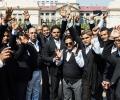
'We have already prejudged the issue. And now things have reached a point where it is very difficult for a person to say that he could be innocent.'

Rajasthan Cricket Association official Jaideep Bihani has accused the Rajasthan Royals of match-fixing after they failed to chase down nine runs in the final over in their last two matches.

The BJP government in Gujarat has formed a five-member committee, headed by a retired Supreme Court judge, to assess the need for the Uniform Civil Code (UCC) in the state and to draft a bill for the same. The committee will submit its report within 45 days. The decision has sparked debate with the Opposition claiming it is an attempt to divert attention from pressing issues ahead of the upcoming local body polls, while the government insists the UCC will protect the rights of tribal communities. The committee will consult with religious leaders, including those from the Muslim community.

The Allahabad high court on Wednesday stayed further proceedings before a civil court hearing the dispute over Jama Masjid in Uttar Pradesh's Sambhal.
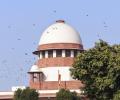
The Indian government defended the Waqf (Amendment) Act, 2025 in the Supreme Court, arguing that waqf, while an Islamic concept, is not an essential part of Islam. Solicitor General Tushar Mehta stated that waqf is essentially charity, which is recognized across religions, and cannot be considered a fundamental tenet of any faith. He also argued that the amended law addresses secular aspects of waqf and activities unrelated to Islam, and that "waqf by user" does not grant ownership of public land. Mehta highlighted the extensive consultations involved in the bill's creation, including feedback from various stakeholders. The hearing will continue on Thursday.

The action came after a 'jatha' of 101 farmers, who resumed their foot march to Delhi shortly after 12 noon on Saturday from the Shambhu protest site on the Punjab-Haryana border, reached the barricades put up by the Haryana security personnel.

Seventeen years after the cash-at-judge's door case rocked the judiciary, a special Central Bureau of Investigation court in Chandigarh on Saturday acquitted former Punjab and Haryana high court judge Nirmal Yadav and four others in the matter.

The Congress on Wednesday asserted that the only way to comprehensively investigate the Adani issue is through a Joint Parliamentary Committee (JPC) and claimed that the Supreme Court-appointed expert committee would be a 'clean chit' panel for the government.
The Supreme Court of India on Tuesday questioned the issue of using "spyware against terrorists" and stated that any report touching upon the country's "security and sovereignty" won't be made public. The court indicated it might address individual concerns regarding privacy breaches, but the report of the technical committee would not be a document for public discussion. The court will examine the extent to which the report can be shared publicly. The court's statement came during a hearing on a petition related to the alleged use of Pegasus spyware for surveillance. The court also emphasized that "having spyware is not wrong, against whom you are using is the question" and that the security of the nation cannot be compromised. The hearing has been adjourned to July 30.

Vice President Jagdeep Dhankhar has questioned the lack of an FIR in the case involving the discovery of burnt cash at a Delhi High Court judge's residence, raising concerns about potential immunity from prosecution for certain individuals. He criticized the delay in investigation and the in-house probe by a three-judge panel, highlighting the importance of transparency and the rule of law in addressing such a significant incident.

The All India Football Federation decided to form an eight-member task force to look into the Master Rights Agreement (MRA) negotiations with its commercial partner Football Sports Development Ltd
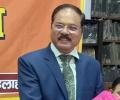
Justice Shekhar Kumar Yadav, an Allahabad High Court judge, is set to appear before the Supreme Court Collegium to explain his controversial statements made at a Vishva Hindu Parishad (VHP) function. The Supreme Court has sought a report from the Allahabad High Court after news reports surfaced regarding Justice Yadav's remarks, which were widely condemned as "hate speech". The judge's statements, made at a VHP event, sparked outrage from various quarters, including opposition leaders and lawyers. The Bar Association of India has also condemned the judge's remarks and called for an apology.

Gandhi alleged that assembly and Lok Sabha polls were being "stolen" across the country and there was a "conspiracy" in Bihar to do the same through the Special Intensive Revision of electoral rolls.
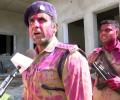
A Circle Officer (CO) in Sambhal, Uttar Pradesh, India, defended his controversial remarks comparing the frequency of Holi and Friday prayers, calling for communal harmony. The CO, Anuj Chaudhary, had previously stated that Holi is a festival celebrated once a year while Jumma namaz takes place 52 times a year. He has since clarified that his intention was to emphasize the importance of respecting festivals of all religions and called for mutual respect and participation in each other's celebrations.
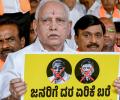
The Supreme Court of India has reserved its verdict on a plea by BJP leader and former Karnataka Chief Minister B S Yediyurappa challenging an order reviving a corruption case against him. The case involves allegations of corruption and criminal conspiracy related to the allocation of industrial land. The court has framed several key legal questions, primarily focusing on the interplay between various provisions of the Prevention of Corruption Act and the Criminal Procedure Code regarding prior sanction to prosecute a public servant. The court has asked Yediyurappa's counsel to file written submissions within two weeks.
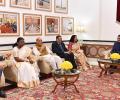
The views came in the wake of Vice President Jagdeep Dhankhar wondering on Friday that how could the CJI, even by "statutory prescription", get involved in executive appointments such as that of Central Bureau of Investigation director, and said it was time to "revisit" such norms.
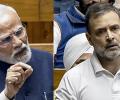
A committee led by Prime Minister Narendra Modi met to select the next chairperson of the National Human Rights Commission (NHRC). Congress president Mallikarjun Kharge and party leader Rahul Gandhi attended the meeting as leaders of the opposition in Rajya Sabha and Lok Sabha respectively. The post has been vacant since Justice (retd) Arun Kumar Mishra completed his tenure on June 1. The committee, which selects the NHRC chief, is headed by the prime minister and includes the Lok Sabha Speaker, home minister, leader of opposition in Lok Sabha, leader of opposition in Rajya Sabha, and deputy chairperson of Rajya Sabha.

The Supreme Court of India has ordered a status quo on a private well located near the entrance of the Sambhal Jama Masjid, prohibiting any action regarding the well without its permission. The order came in response to a plea by the mosque's management committee, which challenged a lower court order that allowed a survey of the mosque, citing concerns over violence and loss of life during previous surveys. The court also instructed the authorities to file a status report within two weeks.

'This four-member committee cannot supersede the four-five member ministerial committees, 25 top-level government bureaucrats, with whom we have had nine rounds of discussions each of which lasted for more than six-seven hours.'
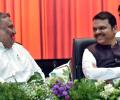
When asked about Prahar Janshakti Party leader Bachhu Kadu's hunger strike, Fadnavis said district guardian minister Chandrashekar Bawankule will speak to him.

The Rajya Sabha secretariat has verified the signatures of 44 of the 55 MPs who had signed a notice to bring a motion for the removal of Allahabad high court Judge Shekhar Yadav over his 'hate speech' even as Kapil Sibal and nine others were yet to verify their signatures.
A bench comprising Chief Justice Sanjiv Khanna and Justice Sanjay Kumar also indicated that it may not take up the pending scheduled petitions, heard earlier by a three-judge bench, during the day as it was sitting in a combination of two judges.

The petition, filed by 20 students who had appeared for the medical entrance exam, has also sought a direction to the National Testing Agency (NTA) and others to conduct the test afresh.
It will be court's opinion versus the legislative power to enact law, the Supreme Court on Wednesday said as it posted the pleas challenging the appointment of the chief election commissioner and election commissioners under the 2023 law on February 4.
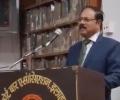
Allahabad High Court judge Justice Shekhar Yadav, who was embroiled in controversy for his speech at a VHP event in December, has opted out of a seminar on the Ram temple movement in the Kumbh Mela area on January 22. Yadav was scheduled to deliver the keynote address at the seminar, which is being held to mark the first anniversary of the consecration ceremony of Lord Ram Lalla in the Ayodhya temple.

In his letter to President Droupadi Murmu, SCBA President Adish C Aggarwala urged her to seek presidential reference of the apex court judgement in the electoral bonds scheme case.
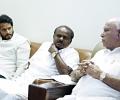
The Supreme Court referred to a larger bench the legal issues stemming from a plea of BJP leader B S Yediyurappa, including the question whether a prior sanction to prosecute is needed under the Prevention of Corruption Act after a magisterial court order of inquiry. The questions revolve around the interplay between the provisions of the Prevention of Corruption Act and the Code of Criminal Procedure on the issue of prior sanction to prosecute a public servant.

Four-time Odisha MP Pinaki Misra's wedding to firebrand TMC MP Mahua Moitra in a quiet, intimate ceremony that chose privacy and tradition over fanfare, was a reflection of his personal style.

Can ordinary citizens counter this backward march? Can peace activists ensure that the two communities retain their bonds? Do they have a choice, asks Jyoti Punwani.

The Supreme Court of India began hearing a batch of petitions challenging the constitutional validity of the Waqf (Amendment) Act, 2025. The bench, led by Chief Justice Sanjiv Khanna, asked both sides to address whether the court should entertain the petitions or relegate them to the high court. The hearing is underway with senior advocate Kapil Sibal arguing for the petitioners. The act, which was passed by Parliament following heated debates, has been challenged by various parties including AIMIM leader Asaduddin Owaisi, All India Muslim Personal Law Board (AIMPLB), and Jamiat Ulama-i-Hind.

The Supreme Court has refused to hear a plea by the Shiromani Gurdwara Parbandhak Committee (SGPC) challenging the temporary release of Dera Sacha Sauda chief Gurmeet Ram Rahim Singh. The court noted that Singh's counsel objected to the maintainability of the PIL before the high court, which was disposed of on the ground that it was filed against a single person, Singh. The bench said it was not inclined to consider the present petition. Singh is serving a 20-year jail term for raping two of his disciples.
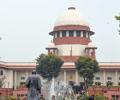
The Supreme Court on Thursday dismissed a batch of pleas seeking to review its October 2023 verdict declining legal sanction to same-sex marriage.
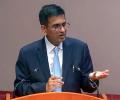
Former chief justice of India D Y Chandrachud on Friday said media reports of him being considered for the National Human Rights Commission chairperson's post were 'untrue'.
 © 2026 Rediff.com - Advertise with us - Disclaimer - Privacy Policy - Sitemap - Feedback - About us - Terms of use - Grievances